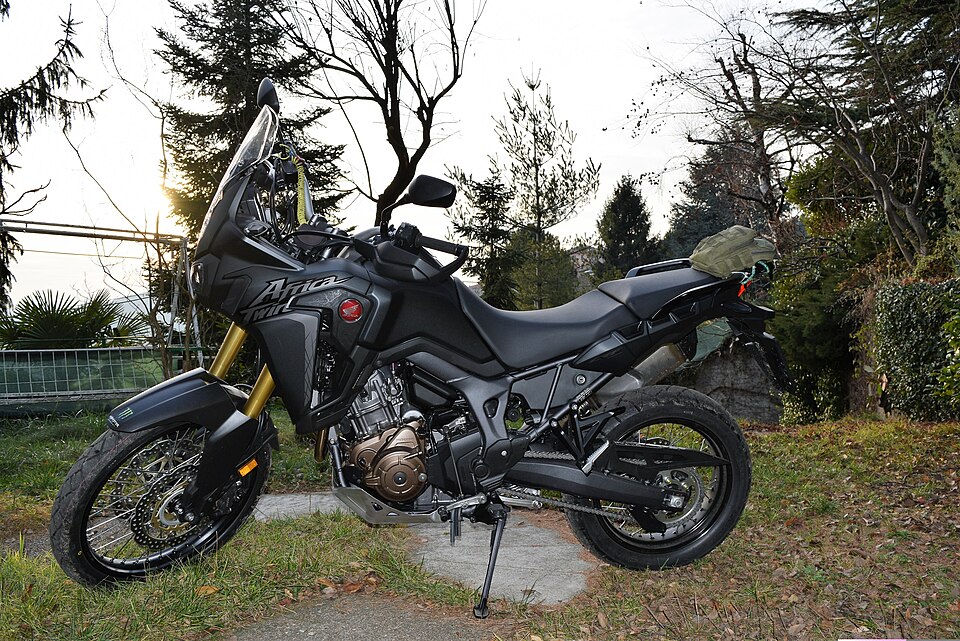
Honda Africa Twin (2016–2017): what actually fails
The documented failure patterns on used Honda Africa Twins — the mileage window where each shows up,
and what the repair typically costs at an independent shop. This is the same data NoLemon's Brief checks
against every VIN.
The fork seals on 2016-17 bikes fail early and often repeatedly — owners report leaks well before 20k miles, and Honda revised the front end for 2018. Run a finger above each dust seal and check for oil weeping down the fork legs or misting the front caliper. Ask whether seals were already done and with what parts; repeat failures on stock seals are common.
BEFORE YOU BUY Ask for repair records covering this item. If it hasn't been addressed and the
car is in or near the mileage window, price the $250–$500 repair into your offer — or make it the seller's problem.
2016–2017TYPICAL 0k–30k MIUP TO $200
Low-speed stalling, especially DCT models
Early Africa Twins — DCT bikes in particular — are known to stall when rolling to a stop, with NHTSA complaints and long owner-forum threads describing engines dying in traffic. Honda addressed it with updated ECU settings, so ask whether all dealer software updates were applied. On the test ride, make several slow stops and low-speed U-turns and watch for the idle dipping or the engine cutting out.
BEFORE YOU BUY Ask for repair records covering this item. If it hasn't been addressed and the
car is in or near the mileage window, price the up to $200 repair into your offer — or make it the seller's problem.
Buying a used Africa Twin?
Run the VIN through NoLemon free — decode, open recalls, safety ratings and complaint counts in seconds.
The full Brief adds title & salvage history, market position, and a negotiation battle card with exact prices.